
Most real estate fits neatly into one box: commercial or residential. Typically, you receive loan terms based on that classification. For example, commercial property loans are usually more expensive, requiring higher down payments and interest rates. Residential loans, on the other hand, tend to offer easier terms, but the amount you can borrow is often capped.
However, some properties are hybrids. These mixed-use spaces feature commercial areas alongside residential units. Because the property generates income from both businesses and residents, lenders weigh both revenue streams when structuring your loan agreement.
This guide explains how mixed-use property loans work, their standard qualification criteria, and how they can help strengthen your real estate portfolio.
What are Mixed-Use Property Loans?
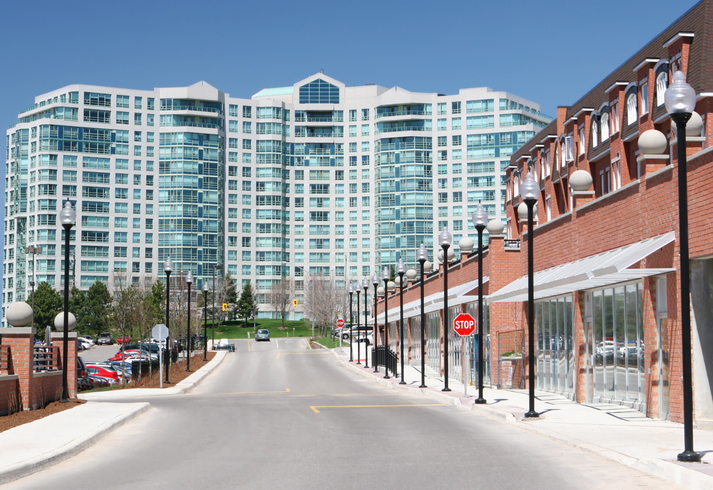
A mixed-use property combines commercial and residential spaces, and the financing used to purchase or develop it is called a mixed-use property loan. A common example is a building with retail space on the ground floor and rental apartments above. Investors love this property type because it allows one asset to do two jobs.
Since a standard residential loan ignores commercial lease income, and a commercial loan overlooks residential occupancy, mixed-use loans bridge the gap. They align your financing with the property’s actual revenue generation. Lenders evaluate your complete income picture, factoring in rental income, business occupancy, and foot-traffic patterns.
If an asset performs well on both fronts, that combined income strengthens your borrowing position. Before pursuing this route, ensure the combined rental and lease income covers your costs. If the numbers don’t pencil out, the loan can quickly become a liability.
How Mixed-Use Property Loans Benefit Your Asset Building
Without a specific loan for hybrid properties, you are forced to fit your asset into the wrong category. A residential lender might ignore the commercial activity, while a commercial lender might give no weight to the residential side.
In either scenario, you risk getting unfavorable terms or being denied altogether. Mixed-use loans help blend both sides of your asset, allowing you to develop them for strong expected returns.
Here is why these loans are so beneficial for investors:
Higher Loan Amounts
Mixed-use properties feature two income-generating components, allowing lenders to size your loan accordingly. When you have commercial tenants on long-term leases and occupied residential units under one roof, the asset performs well. This translates into a higher loan amount, as your debt service coverage ratio (DSCR) is much stronger when backed by dual revenue streams. The more your net operating income (NOI) supports the repayment, the more capital a lender will offer.
Stronger Approval Odds
A well-occupied hybrid property presents a strong borrowing case, provided it is evaluated properly. Mixed-use loans assess both commercial revenue and residential rent, helping you paint a convincing picture during underwriting. Commercial occupancy offsets residential vacancy risks, while consistent residential rents cushion the impact of commercial tenant turnover. Each side covers the other’s weak points, directly improving your approval odds.
Diversified Income
A single-use property relies on one income stream. If that dries up, you will feel the financial strain immediately. A hybrid property offers built-in diversification. If your retail tenant pays on time, an empty residential unit won’t destroy your cash flow. Because you finance two revenue streams under one roof, this diversification keeps your debt service supported even if one side of the asset hits a rough patch.
Higher Property Valuation
A property’s income potential heavily influences its valuation. A hybrid property generating both commercial lease revenue and residential rent generally commands a higher income-based valuation than a single-use property of the same size. This matters because lenders use the appraised value to determine your loan-to-value ratio (LTV). A stronger valuation gives you more borrowing room without overextending your down payment.
Faster Equity Building
You build equity as your property’s value increases and your loan balance decreases. A mixed-use property moves both of these needles faster. Having two income streams ensures stronger, more consistent debt repayment. Furthermore, a hybrid property benefits from two distinct markets. If commercial rents rise or residential demand surges, your asset appreciates faster than a single-use property waiting on a single market shift.
Let Us Help You Explore Financing Solutions
For every property, there is a financing solution that fits perfectly, and LMC Alternative Business Capital makes sure of that. If you want to purchase, develop, or remodel a mixed-use property, explore our financing solutions to find a package tailored to your plans. We make property financing accessible and practical. Reach out to us today, and we’ll help you figure out your finances.
FAQs
Can I live in a mixed-use property I’m financing?
Yes, you can occupy one of the residential units while operating or leasing the commercial space separately. This is known as owner-occupancy. Keep in mind that this affects which loan products you qualify for, so always confirm the exact terms with your lender.
Does the commercial-to-residential ratio affect my loan terms?
Absolutely. If a mixed-use property is heavily residential (e.g., above 50% residential space), you often qualify for conventional terms, meaning better interest rates and a lower down payment. If the property is predominantly commercial, you move into commercial lending territory, which typically requires higher rates and a larger down payment.
Can I refinance a mixed-use property loan?
Yes, you can refinance to secure a lower rate or restructure your repayment terms. During the process, the lender will reassess your current occupancy rates and the commercial-to-residential income ratio.